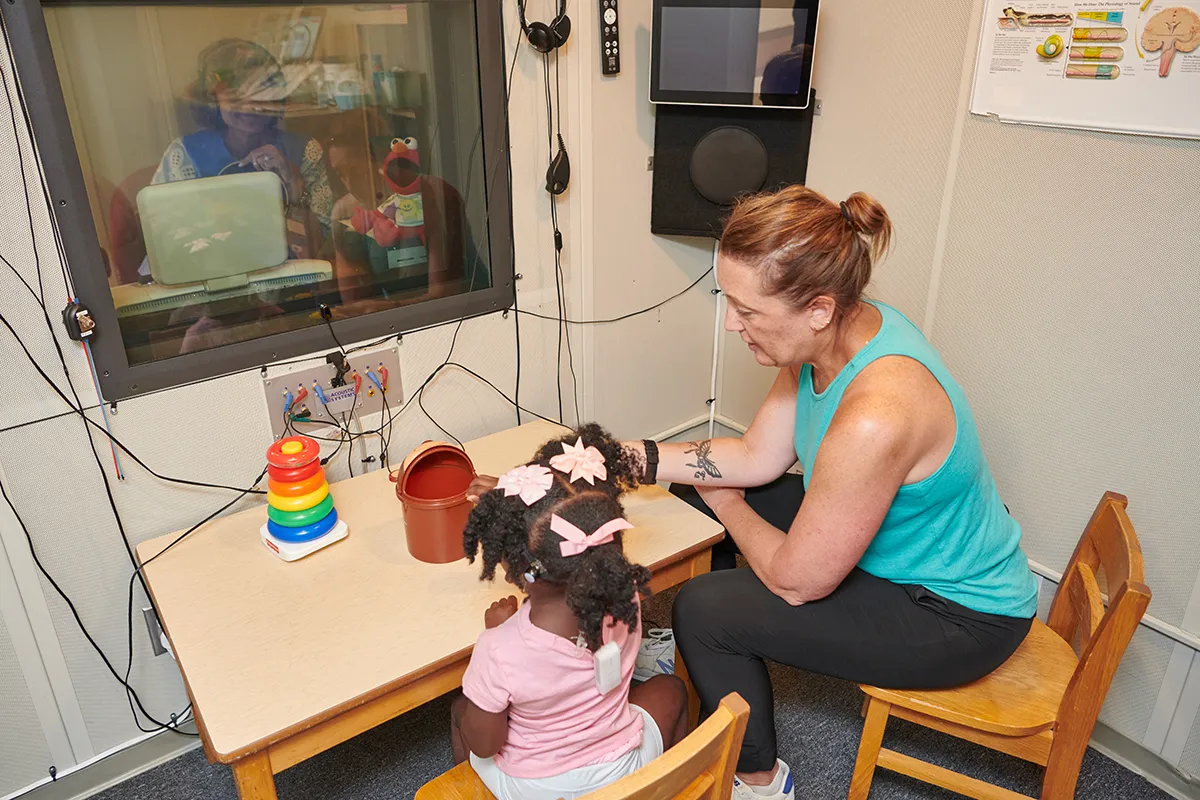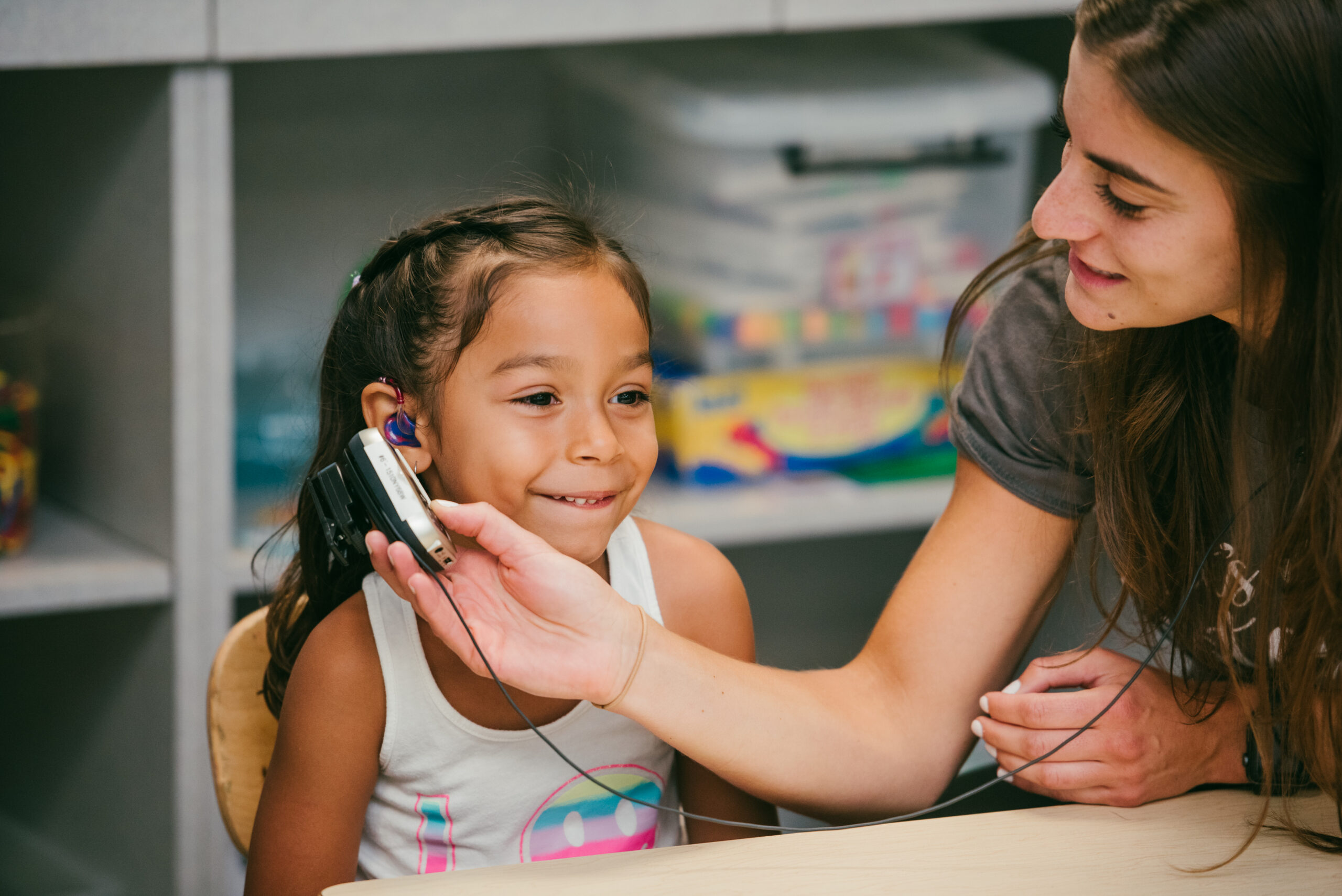
Itinerant Services - How It Works
Science and Strategy Behind Summit Speech School’s Itinerant Support Model
Summit Speech School’s Itinerant services are built on the same evidence base that drives our Preschool Program. Here's a closer look at what our Teachers of the Deaf do and why it makes a difference.
What Our Teachers of the Deaf/Hard of Hearing Target: The Auditory Skill Framework
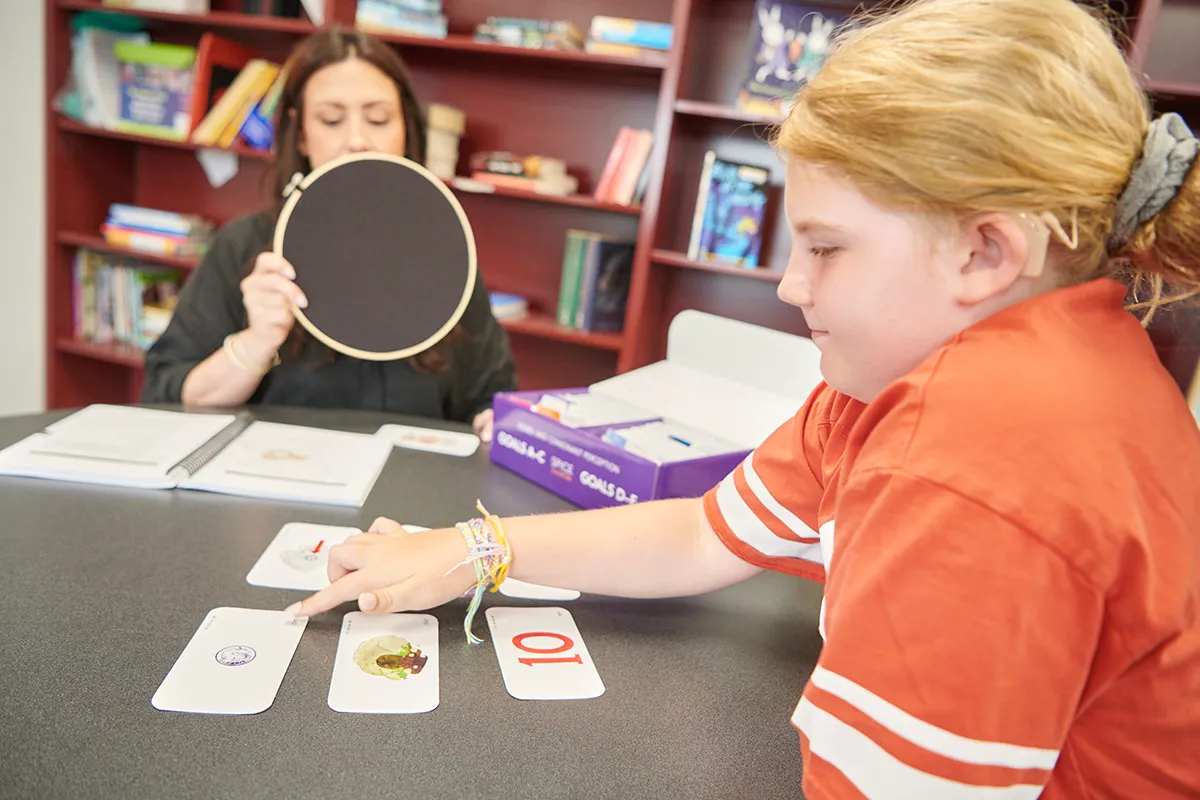
Each itinerant Teacher of the Deaf/Hard of Hearing develops a personalized plan targeting a progression of auditory skills:
- Auditory Attention and Detection
- Auditory Memory and Discrimination
- Auditory Recognition, Sequencing, and Comprehension
- Auditory Retrieval and Expressive Communication
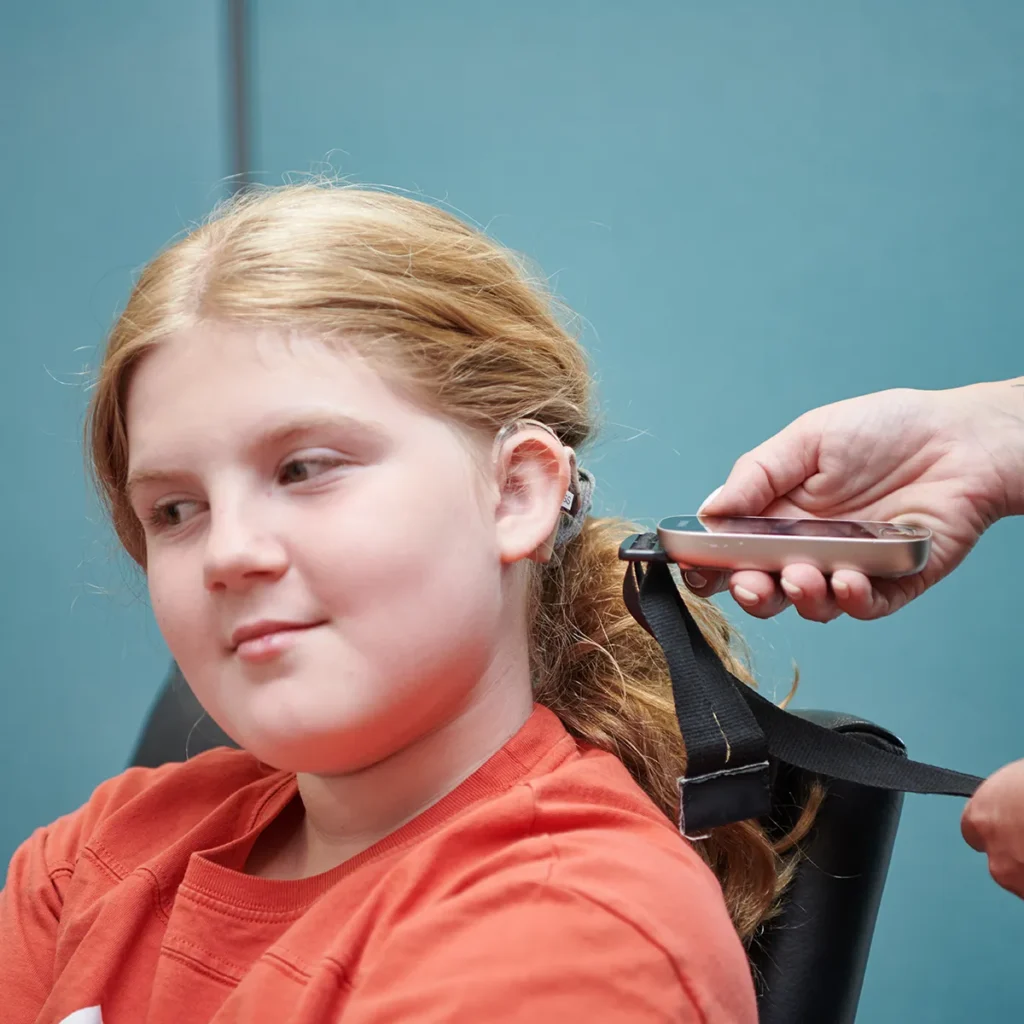
The 10-Ling Sound Check
The 10-Ling sounds are an expanded set of speech sounds used to quickly assess whether a child has access to the full range of frequencies necessary for spoken language. Our Teachers of the Deaf/Hard of Hearing perform these checks daily to ensure every student is getting consistent, reliable access to sound throughout the school day.
The sounds — /m/, /n/, /ng/, /p/, /b/, /t/, /d/, /s/, /sh/, /h/ — represent the full spectrum of frequencies needed for spoken language, from low to high.
Performing 10-Ling checks correctly requires specialized training in acoustic frequency analysis, auditory-skill observation, device function interpretation, and troubleshooting of hearing aids, cochlear implants, and FM/DM (remote microphone) systems. This is why these checks must be performed by professionals with advanced expertise, not classroom teachers or aides.
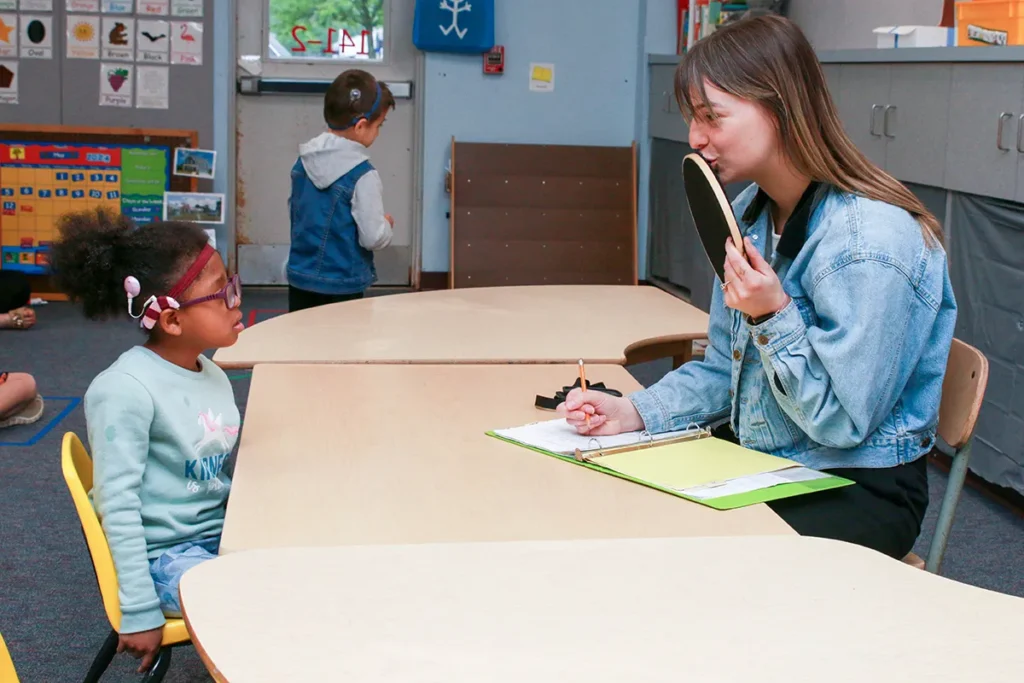
How Itinerant Teachers Support Listening and Spoken Language
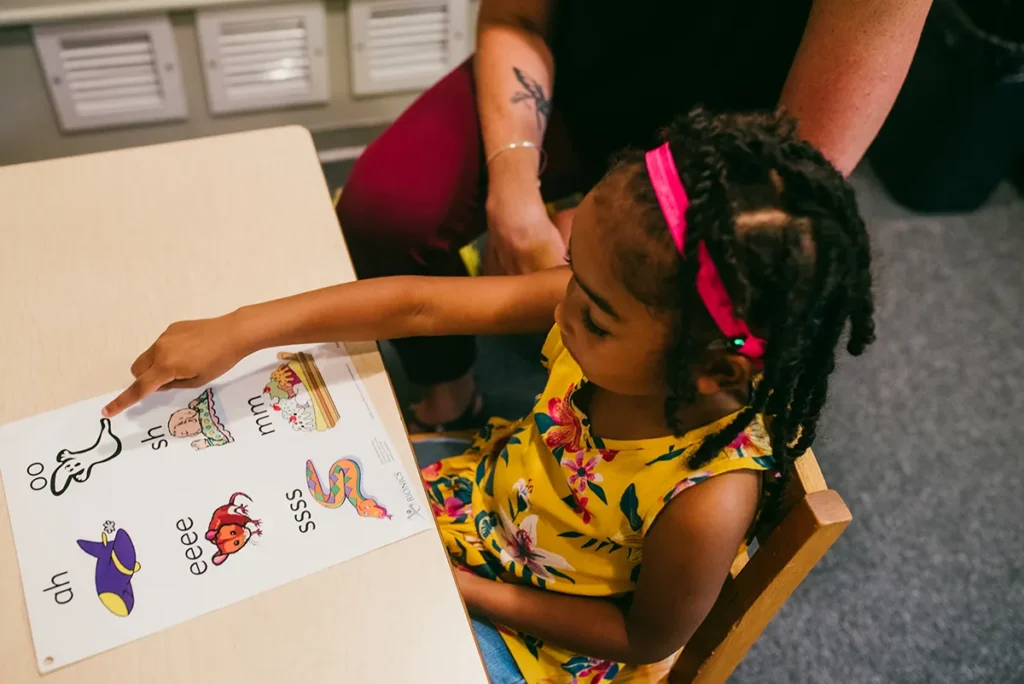
Summit Speech School’s Teachers of the Deaf/Hard of Hearing partner with school staff to ensure students receive consistent, high-quality auditory-based instruction throughout the school day.
Listening and Spoken Language is an evidence-based approach grounded in auditory neuroscience. It teaches children to use the hearing they receive through their devices to develop strong listening, spoken language, and communication skills. For students whose families and Individualized Education Program (IEP) teams have chosen Listening and Spoken Language, consistency in applying this approach is essential to its success.
Why Specialized Training Matters
- Interpret audiological data
- Troubleshoot complex hearing technology
- Conduct auditory skill assessments
- Implement evidence-based Listening and Spoken Language strategies
- Modify classroom environments to improve auditory access
Any Questions?
Our team is always ready to answer your questions.